REQUEST PRODUCT BROCHURE
Brochure sent directly to your inbox
Sunflex SVG20 vs SVG30 Which Is Right for a Surrey Home?
When planning an extension or new opening to a garden, sliding doors are often one of the most important design decisions. Two of the most commonly specified systems from Sunflex are the SVG20 and SVG30, both high-quality aluminium sliding doors but designed for different applications.
This guide explains the key differences between SVG20 and SVG30, when each system works best, and how to choose the right option for a Surrey home.
In Brief
The Sunflex SVG20 is a slimmer, more design-led sliding door system suited to lighter-duty residential applications, while the SVG30 is a heavier-duty system designed for larger openings, higher traffic areas and increased structural demands. The right choice depends on opening size, usage and detailing rather than appearance alone.
What are Sunflex SVG20 and SVG30?
SVG20 and SVG30 are sliding door systems, not bifold or folding systems, and are typically specified where uninterrupted views and smooth linear movement are preferred.
Overview of the SVG20 system
SVG20 is typically chosen where:
Openings are moderate in size
A slimmer frame profile is preferred
The doors are primarily residential in use
It is often specified on:
Standard rear extensions
Smaller openings
Projects where visual lightness is a priority
Overview of the SVG30 system
SVG30 is engineered for more demanding situations, including:
Larger and wider openings
Heavier door panels
High-traffic or multi-use spaces
It is commonly used on:
Large kitchen–living extensions
Openings with higher wind exposure
Projects where long-term durability is critical
Both SVG20 and SVG30 are aluminium sliding door systems designed for large glazed openings, offering smooth operation and clean sightlines without folding or stacking panels. You can view full specifications, configuration options and design details on our Sunflex aluminium sliding door systems page.
Key differences between SVG20 and SVG30
Although both systems share Sunflex build quality, there are important technical differences that affect suitability.
Frame strength and panel capacity
SVG30 is designed to accommodate:
Heavier glass units
Larger individual door leaves
Greater structural loads
SVG20 is better suited to lighter configurations where extreme panel weights are not required.
Opening size and configuration
For wider spans or more complex configurations, SVG30 offers greater flexibility. SVG20 performs very well within its intended size range but is not designed for the same extremes.
Usage and durability
On projects where doors are opened and closed frequently or used as a primary access point, SVG30’s heavier-duty components can offer greater long-term resilience.
Which system is best for Surrey extensions?
Surrey homes often combine large glazed openings with design-sensitive detailing, making correct system selection important.
Typical Surrey use cases for SVG20
SVG20 is often suitable for:
Family homes with moderate-sized extensions
Projects prioritising slim sightlines
Situations where door use is occasional rather than constant
Typical Surrey use cases for SVG30
SVG30 is more appropriate where:
Openings are large or structurally ambitious
The doors form a major connection between inside and outside
Long-term robustness is a priority
Choosing the wrong system for the opening size is one of the most common mistakes we see.
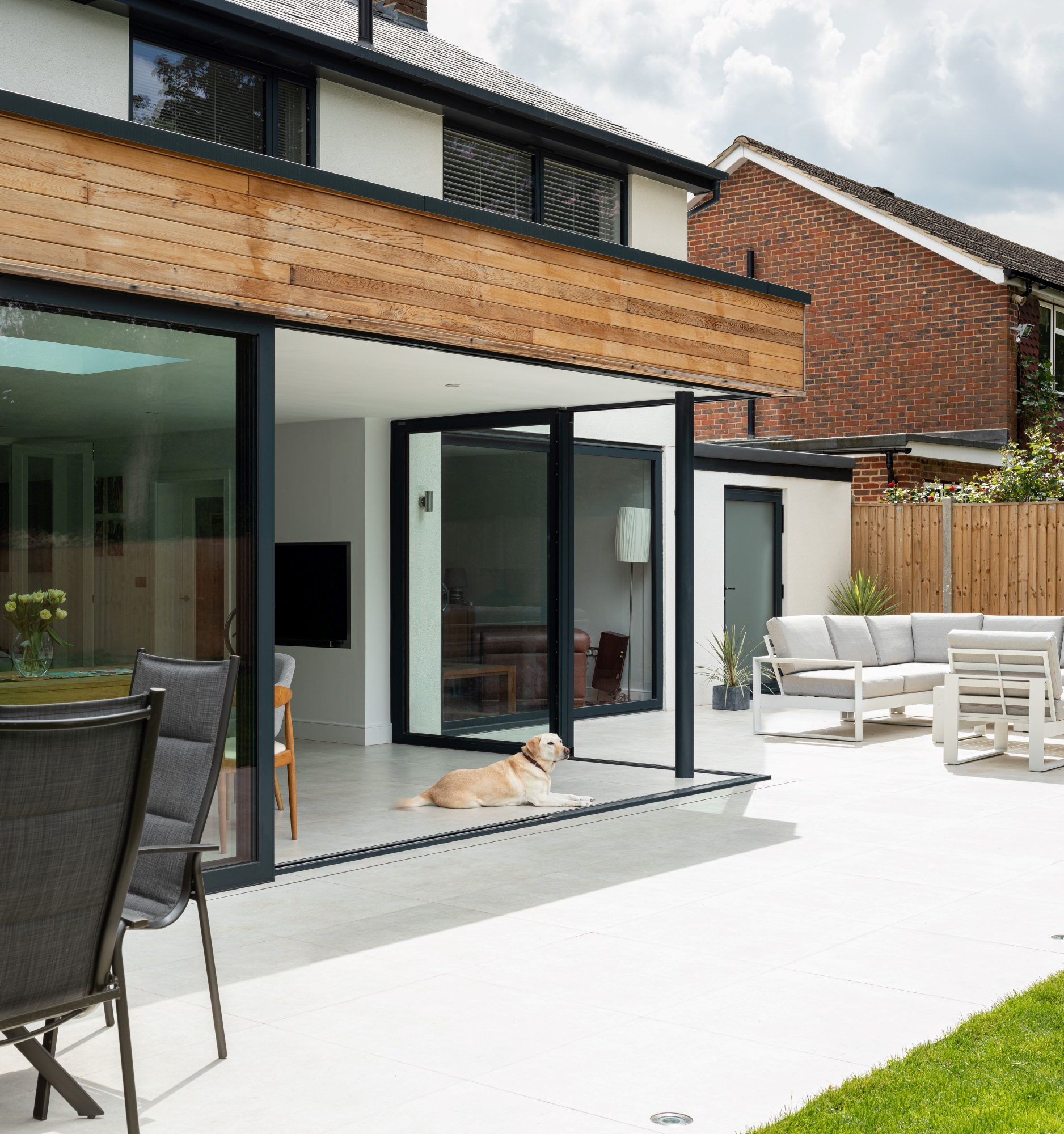
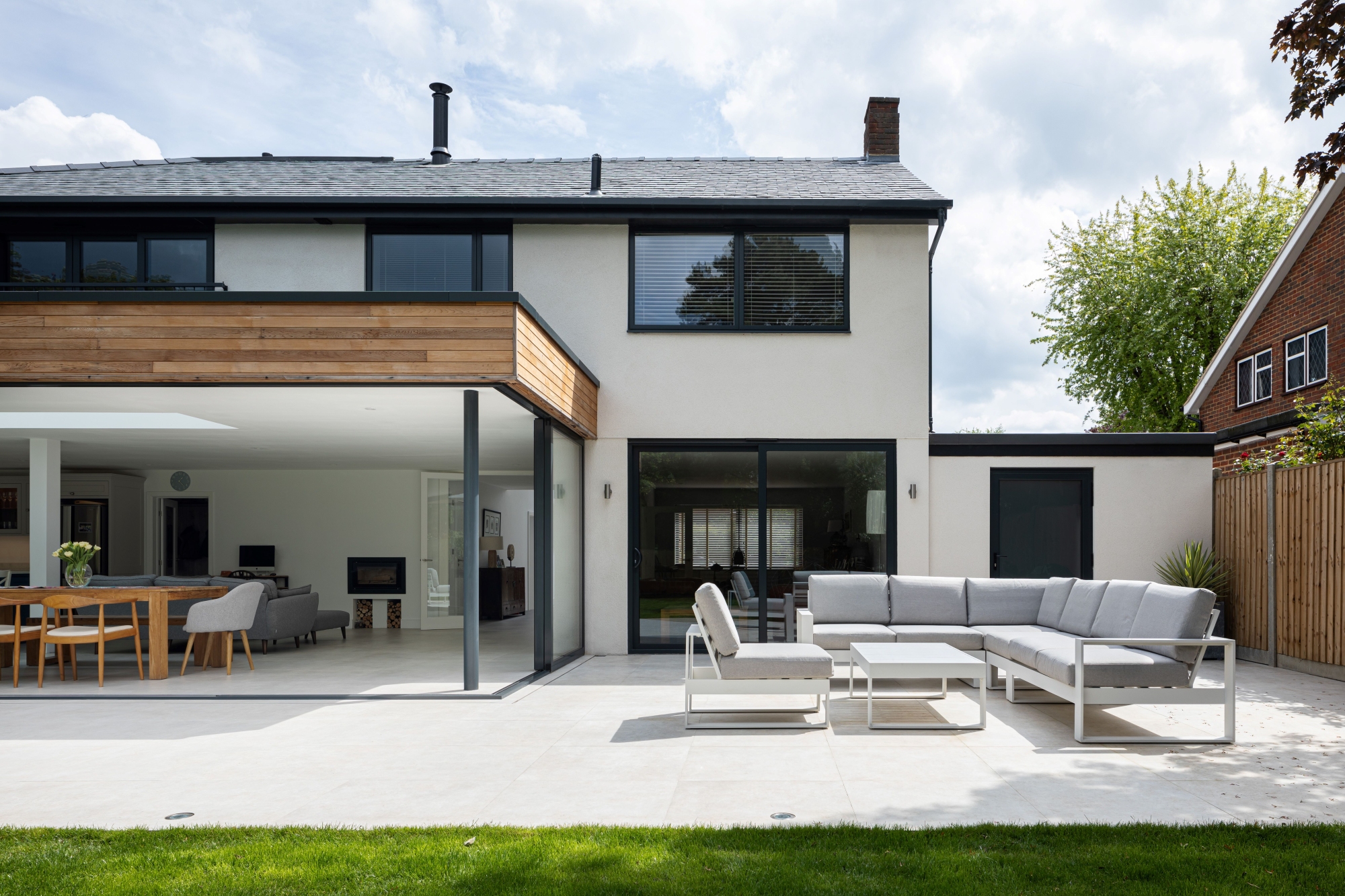
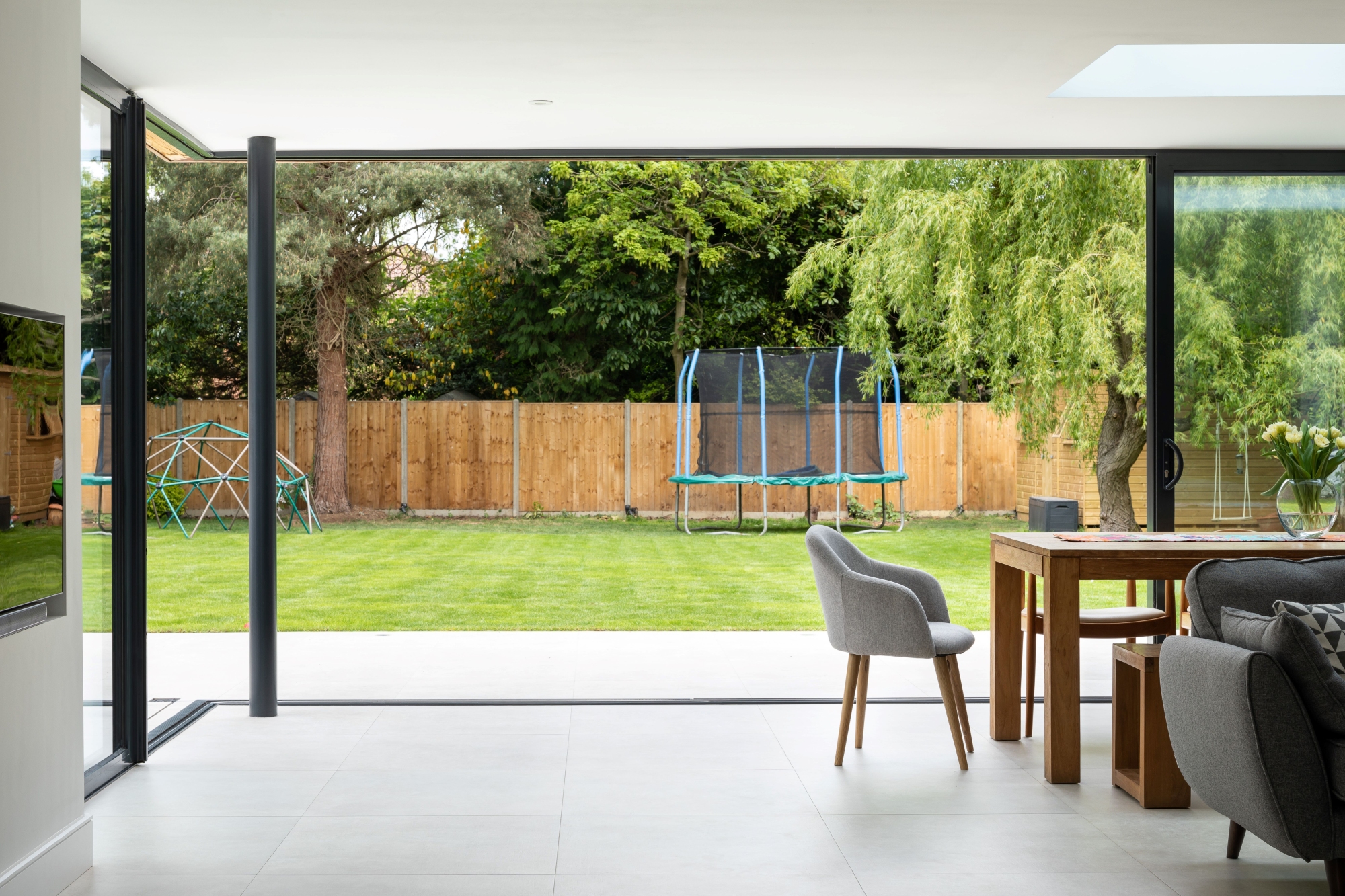
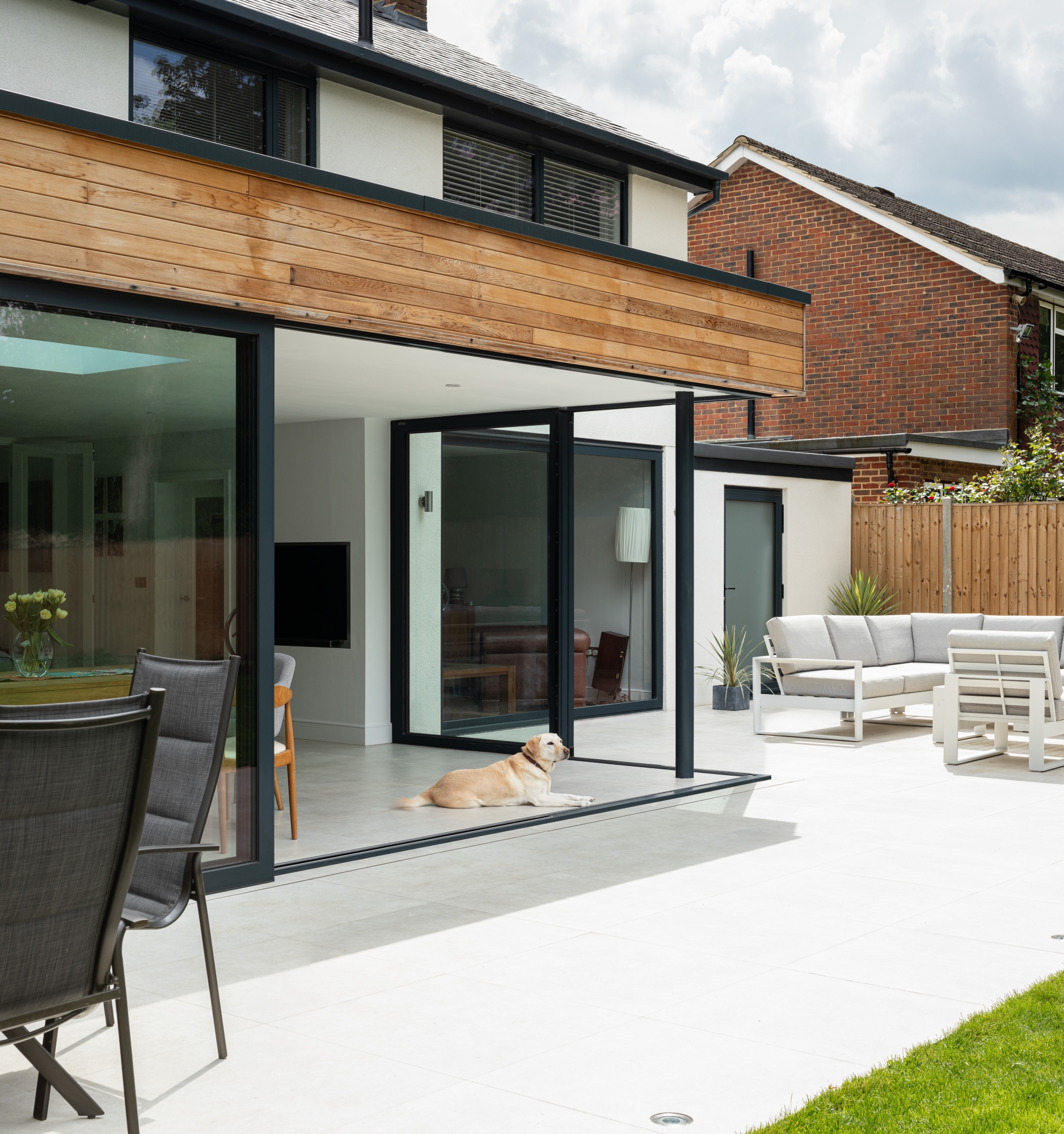
You can see how a Sunflex sliding system performs in a real project by viewing a recent Sunflex sliding door installation on a Surrey home.
Thresholds, drainage and detailing
Regardless of system choice, correct detailing is critical.
Threshold height considerations
Threshold selection affects:
Accessibility
Weather performance
Internal floor levels
The chosen system must align with finished floor levels and external drainage design.
Installation quality matters
Even the best bifold system will underperform if:
Structural openings are inaccurate
Thresholds are poorly detailed
Drainage is not properly considered
System selection and installation must be treated as a single process.
Planning, compliance and performance
Both SVG20 and SVG30 can be specified to meet current Building Regulations when configured correctly. Performance figures depend on:
Glass specification
Door size and configuration
Installation quality
Early coordination with the wider build team helps avoid late-stage compromises.
Frequently Asked Questions
Is SVG30 always better than SVG20?
No. SVG30 is not “better” in all cases — it is simply designed for more demanding applications. SVG20 is often the right choice for standard residential projects.
Can SVG20 be used on large openings?
SVG20 performs best within defined size limits. For larger or heavier configurations, SVG30 is usually more appropriate.
Do both systems look the same once installed?
Visually, they are similar. The main differences relate to engineering, capacity and long-term performance rather than appearance.
Which system lasts longer?
Both are durable systems, but SVG30 is designed to cope better with higher loads and heavier usage over time.
If you’re planning a Surrey extension and are unsure whether SVG20 or SVG30 is right for your opening, early advice can help ensure the system selected matches both the design intent and practical requirements of the project.
GALLERY

Arrange a showroom visit - 01483 920866
REQUEST YOURFREE QUOTE
Simply fill in your details for your free, no obligation quotation, and click "Get Quote"